


Saturn's Dragonfly Bound for Titan
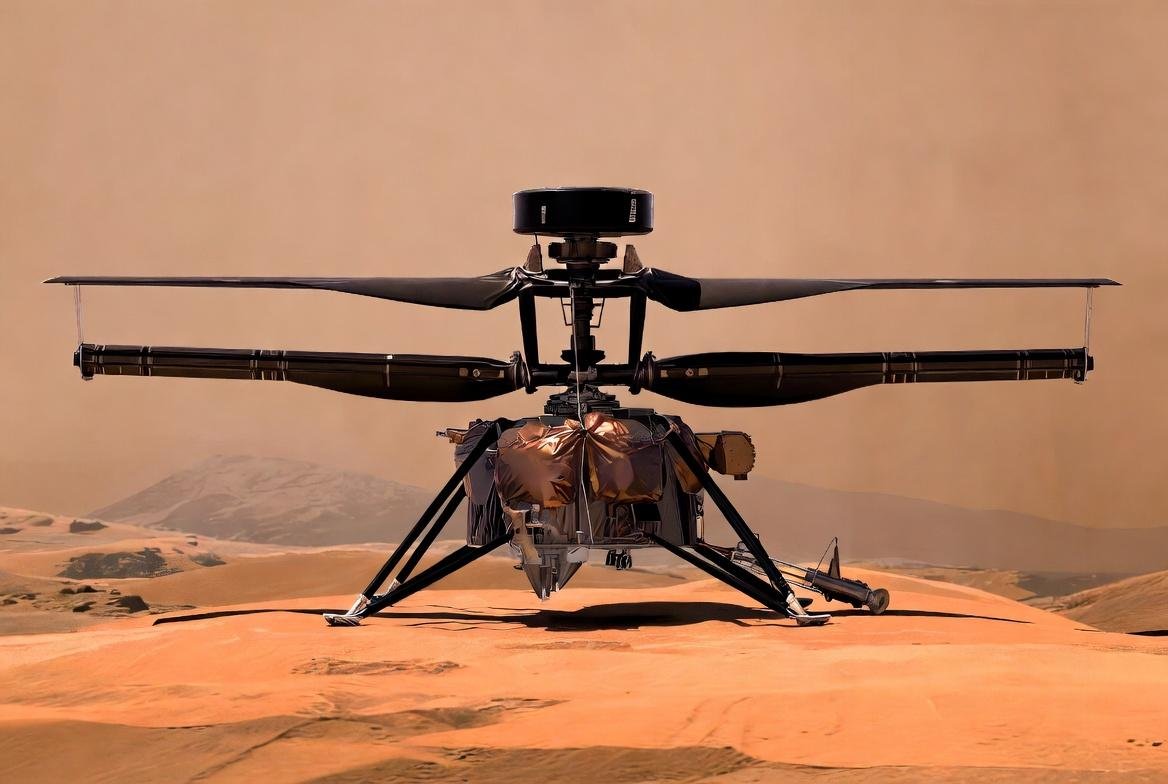

Mission Overview:
Titan is a fascinating world: it has a thick, nitrogen-rich atmosphere (denser than Earth's), stable liquid hydrocarbon lakes and rivers on the surface, and a rich inventory of complex organic (carbon-based) molecules. These conditions make it a prime target for studying prebiotic chemistry—the chemical steps that may lead to life—and assessing habitability, both in water-based and exotic hydrocarbon-based environments.
Dragonfly is not a life-detection mission but will investigate how far prebiotic chemistry has progressed, explore the moon's geology and meteorology, and search for chemical signatures that could indicate past or present biological processes.
Key goals:
Characterize Titan’s organic chemistry and habitability.
Study surface-atmosphere interactions and the methane cycle.
Investigate sites where water ice and organics may have mixed (e.g., impact craters).
Explore diverse terrains: equatorial dunes, interdunes, and the Selk impact crater.
Spacecraft Design:
Dragonfly is a dual-quadcopter (eight rotors in four pairs) about the size of a car. It is powered by a radioisotope thermoelectric generator (MMRTG, similar to Curiosity and Perseverance on Mars) for reliable operation in Titan’s cold, hazy environment.
Titan’s thick atmosphere and low gravity make flight remarkably efficient—Dragonfly can hop several miles (up to ~8 km per flight) between landing sites, vastly expanding the area it can explore compared to traditional landers.
It will carry a sophisticated suite of instruments, including:DraMS (Dragonfly Mass Spectrometer) — Analyzes organic molecules in drilled samples.
DraGNS (Gamma-Ray & Neutron Spectrometer) — Measures subsurface elemental composition.
DraGMet (Geophysics & Meteorology Package) — Includes a seismometer and weather sensors.
DragonCam — Panoramic, microscopic, and navigation cameras.
Timeline Launch:
No earlier than July 2028 (on a SpaceX Falcon Heavy or similar).
Cruise: ~6 years to Saturn.
Arrival & Landing: Late 2034.
Prime Mission: At least 3.3 years, with dozens of flights covering >50–175 miles (80–175+ km) across Titan’s surface.
As of mid-2026, the mission has passed its Critical Design Review, entered the implementation phase, and is progressing through hardware fabrication, rotor testing, and integration.
Dragonfly builds on discoveries from the Cassini-Huygens mission and represents a leap in planetary exploration—combining the mobility of a drone with the analytical power of a sophisticated surface laboratory. Its findings could reshape our understanding of how life’s building blocks form and whether Titan (or similar ocean worlds) could support exotic forms of chemistry relevant to life.
Discussion 0 COMMENTS